
Speech Therapy at Home in Florida: What to Expect
What Is Speech Therapy at Home?
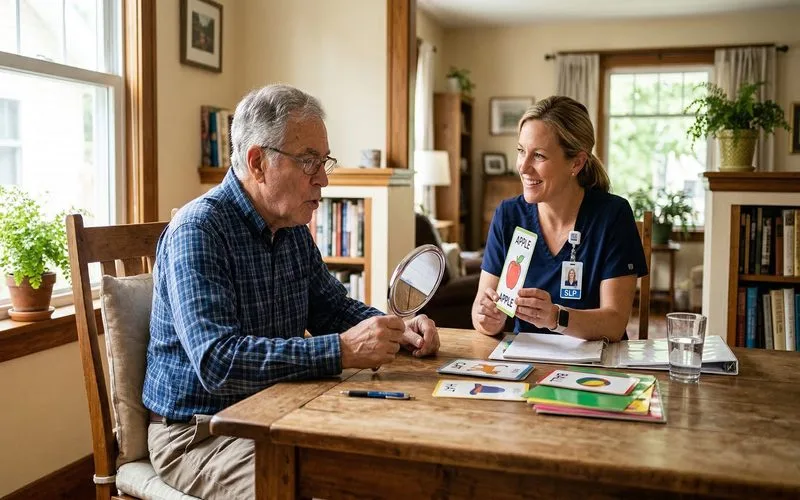
Speech therapy at home, delivered by licensed Speech-Language Pathologists (SLPs), addresses communication and swallowing disorders in the comfort of a patient's residence. This service is critical for patients recovering from stroke, traumatic brain injury, head and neck cancer, or progressive neurological diseases. In Florida, home health SLPs provide specialized evaluation and treatment that helps patients regain the ability to speak, understand language, swallow safely, and think clearly.
The scope of home health speech therapy extends well beyond speech production. SLPs treat aphasia, a language disorder that impairs the ability to speak, understand spoken words, read, or write, which affects approximately one-third of stroke survivors. They also address dysarthria, characterized by slurred or weak speech caused by muscle damage, and apraxia of speech, where the brain struggles to coordinate the movements needed to produce words despite intact muscles.
Dysphagia, or difficulty swallowing, is one of the most medically significant conditions treated by home health SLPs. Swallowing disorders can lead to aspiration pneumonia, malnutrition, and dehydration, all of which are potentially life-threatening, particularly in elderly patients. SLPs perform bedside swallowing evaluations, recommend modified food and liquid textures, teach compensatory swallowing strategies, and prescribe exercises to strengthen the muscles involved in swallowing.
Who Qualifies for Speech Therapy at Home?
Patients qualify for Medicare-covered home health speech therapy when a physician orders the service, the patient is homebound, and the therapy addresses a medically necessary communication or swallowing disorder. Speech therapy can serve as the sole qualifying skilled service for home health, meaning a patient does not need to also receive nursing or physical therapy to be eligible for home health benefits.
Common qualifying conditions include stroke with resulting aphasia or dysphagia, traumatic brain injury affecting communication and cognition, Parkinson's disease causing speech volume and swallowing changes, head and neck cancer treatment affecting speech or swallowing, progressive neurological diseases such as ALS or multiple sclerosis, and cognitive-communication disorders affecting memory, attention, and executive function.
What to Expect During Home Visits
Speech therapy visits typically occur 2 to 3 times per week, with each session lasting 45 to 60 minutes. The initial evaluation is comprehensive, assessing speech production, language comprehension and expression, voice quality, swallowing function, and cognitive-communication skills including memory, attention, problem-solving, and organizational abilities.
Treatment sessions are highly individualized. For patients with aphasia, the SLP may use word-finding exercises, sentence completion tasks, reading and writing practice, and functional communication strategies. For swallowing disorders, sessions include oral motor exercises, swallowing maneuvers such as the Mendelsohn technique or supraglottic swallow, and training on safe eating strategies. Cognitive rehabilitation may incorporate memory notebooks, calendar systems, task sequencing practice, and problem-solving exercises. Family members and caregivers are trained in communication strategies and safe feeding techniques to support progress between visits.
Medicare Coverage for Speech Therapy
Medicare Part A covers home health speech therapy at 100% with no copay, deductible, or coinsurance when all eligibility requirements are met. There is no cap on the number of visits, and coverage continues as long as the services remain medically necessary and the physician recertifies the plan of care every 60 days. Speech therapy qualifies as a standalone skilled service under Medicare home health benefits, allowing patients to receive SLP services as their only home health discipline. Florida Medicare Advantage members should verify that their chosen agency participates in their plan's network.
Speech Therapy Providers in Florida
Of 1,116 Medicare-certified home health agencies in Florida, 701 (62.8%) offer speech therapy services. Use the filters below to find agencies in your city.
Frequently Asked Questions
What conditions does a home health speech therapist treat?
Home health speech-language pathologists treat aphasia (language loss after stroke), dysarthria (slurred speech), apraxia of speech, dysphagia (swallowing disorders), cognitive-communication disorders after stroke or traumatic brain injury, and voice disorders. They also address memory, attention, and problem-solving deficits that affect communication.
How does speech therapy help with swallowing problems?
Speech-language pathologists evaluate swallowing function using clinical assessments and may recommend instrumental testing such as a modified barium swallow study. Treatment includes swallowing exercises to strengthen the muscles involved, diet texture modifications, safe swallowing strategies, and positioning techniques to reduce aspiration risk.
Does Medicare cover speech therapy at home?
Yes. Medicare covers home health speech therapy at 100% with no copay when a physician orders it, the patient is homebound, and the services are medically necessary. Speech therapy can serve as the sole qualifying skilled service for home health eligibility.
How often are home speech therapy visits?
Home health speech therapy typically involves 2 to 3 visits per week, with each session lasting 45 to 60 minutes. The frequency and duration depend on the severity of the condition, the patient's tolerance for therapy, and the goals established in the plan of care.
Can speech therapy help after a stroke?
Yes. Speech therapy is one of the most critical services after stroke. SLPs help patients recover language abilities, improve speech clarity, address swallowing safety, and rebuild cognitive-communication skills such as memory, attention, and reasoning. Research shows that early, intensive speech therapy after stroke leads to the best outcomes.