Skilled Nursing at Home in Florida: What to Expect
What Is Skilled Nursing at Home?
Skilled nursing at home brings hospital-level clinical care directly to patients recovering from illness, injury, or surgery. In Florida, Registered Nurses (RNs) and Licensed Practical Nurses (LPNs) deliver a wide range of medical services in the comfort of a patient's residence, eliminating the need for repeated trips to clinics or extended hospital stays.
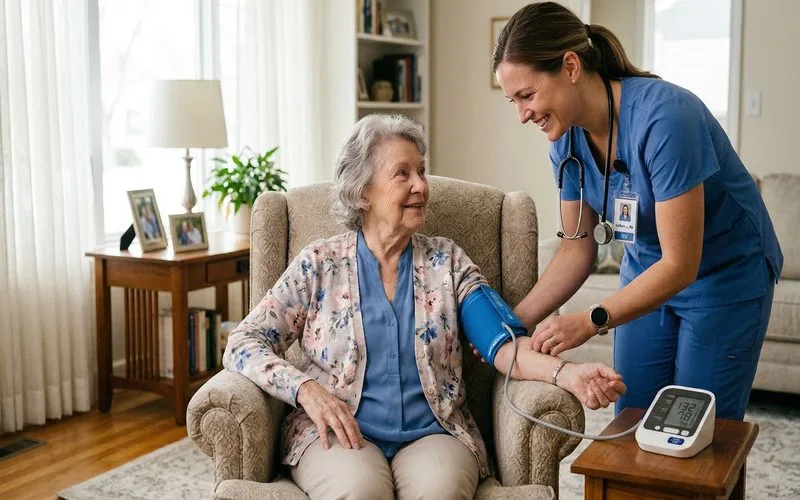
Home health skilled nursing encompasses a broad scope of clinical interventions. Nurses perform wound care for surgical incisions, pressure ulcers, and diabetic foot wounds. They administer IV antibiotics and hydration therapy, manage PICC lines and central venous catheters, and provide medication administration for patients who cannot safely self-manage their prescriptions. Vital sign monitoring, including blood pressure, heart rate, oxygen saturation, and blood glucose levels, is a routine component of every visit.
Beyond hands-on treatments, skilled nurses provide essential disease management education. For patients with chronic conditions such as diabetes, congestive heart failure, or COPD, nurses teach self-monitoring techniques, dietary modifications, medication schedules, and warning signs that require emergency attention. This education component is a critical factor in reducing hospital readmissions, which is a key quality metric tracked by Medicare.
Who Qualifies for Skilled Nursing at Home?
To receive Medicare-covered skilled nursing at home, patients must meet three primary criteria. First, a physician must order the home health services and establish a plan of care. Second, the patient must be considered homebound, meaning leaving home requires considerable effort due to medical conditions. Third, the patient must need intermittent skilled care, meaning the nursing services are medically necessary but not required on a continuous, around-the-clock basis.
Common qualifying conditions include post-surgical recovery requiring wound care or drain management, newly diagnosed diabetes needing insulin education, heart failure requiring medication adjustments and weight monitoring, infections requiring IV antibiotic therapy, and catheter care following urological procedures. Patients transitioning from hospital to home are among the most frequent recipients of skilled nursing services.
What to Expect During Home Visits
Skilled nursing visits typically occur one to three times per week, with each visit lasting 30 to 60 minutes depending on the complexity of care required. During the initial visit, the nurse performs a comprehensive assessment covering medical history, current medications, functional abilities, fall risk, and home safety. This assessment forms the foundation of an individualized care plan.
Subsequent visits follow the care plan and may include wound measurements and dressing changes, medication reconciliation, catheter irrigation or replacement, diabetes management including blood glucose monitoring and insulin adjustment education, and patient and caregiver training. The nurse documents all findings and communicates regularly with the prescribing physician to adjust the care plan as needed.
Medicare Coverage for Skilled Nursing
Medicare Part A covers skilled nursing home health services at 100% with no copay, no deductible, and no coinsurance when all eligibility criteria are met. There is no predetermined limit on the number of visits. Coverage continues as long as the patient remains homebound, the services are medically necessary, and the physician recertifies the plan of care every 60 days. Florida Medicare Advantage plans also cover home health skilled nursing, though network restrictions may apply.
Skilled Nursing Providers in Florida
Of 1,116 Medicare-certified home health agencies in Florida, 884 (79.2%) offer skilled nursing services. Use the filters below to find agencies in your city.
Frequently Asked Questions
How often does a skilled nurse visit at home?
Skilled nursing visits typically occur 1 to 3 times per week, depending on your medical needs. Each visit lasts between 30 and 60 minutes. Your physician and the home health agency will determine the exact frequency based on your care plan.
What is the difference between an RN and LPN in home health?
A Registered Nurse (RN) performs assessments, develops care plans, administers IV medications, and manages complex wound care. A Licensed Practical Nurse (LPN) handles routine tasks such as vital sign monitoring, medication administration, and basic wound care under the supervision of an RN.
Does Medicare pay for skilled nursing at home?
Yes. Medicare covers skilled nursing visits at home 100% with no copay when ordered by a physician, when the patient is homebound, and when the care is medically necessary and intermittent. There is no limit on the number of visits as long as these conditions are met.
Can a home health nurse administer IV medications?
Yes. Registered Nurses in home health are trained to administer IV antibiotics, hydration therapy, and other intravenous medications. They also manage PICC lines and central venous catheters, ensuring patients can receive hospital-level treatments safely at home.
Do I need a doctor's order for home health nursing?
Yes. All home health skilled nursing services require a physician's order. Your doctor must certify that you are homebound, need intermittent skilled care, and establish a plan of care. The home health agency will coordinate this paperwork with your physician.