
Physical Therapy at Home in Florida: What to Expect
What Is Physical Therapy at Home?
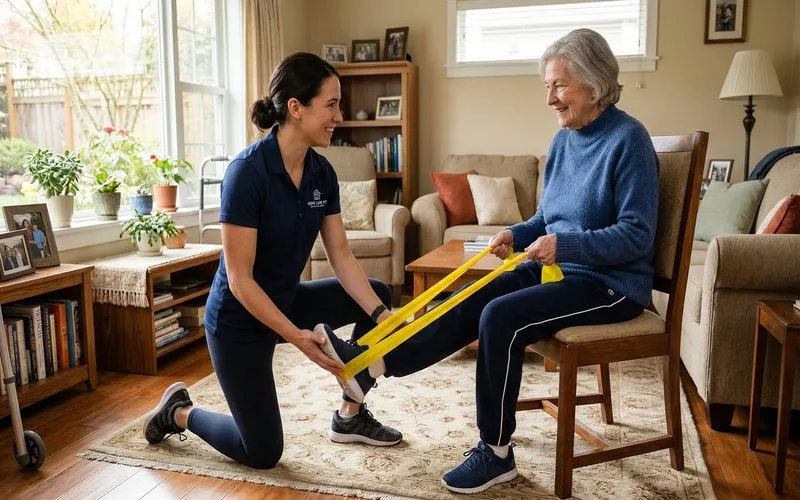
Physical therapy at home provides patients with licensed, one-on-one rehabilitation services delivered directly in their residence. In Florida, licensed Physical Therapists (PTs) travel to patients' homes to help restore mobility, rebuild strength, improve balance, and reduce pain following surgery, injury, stroke, or prolonged hospitalization. Home-based PT allows therapists to tailor treatment to the exact environment where the patient lives, addressing real-world challenges like navigating narrow hallways, stepping into bathtubs, or climbing specific staircases.
The scope of home health physical therapy covers a wide range of treatments. Therapists design individualized exercise programs that target strength deficits, joint stiffness, and endurance limitations. Gait training helps patients walk safely with or without assistive devices such as walkers, canes, or rollators. Balance and fall prevention programs are particularly important for Florida's senior population, as falls are the leading cause of injury-related hospitalization among adults over 65.
Post-surgical rehabilitation is one of the most common reasons for home health PT. Patients recovering from total hip replacement, total knee replacement, cardiac surgery, or spinal procedures benefit from guided exercise progressions that restore functional movement while protecting surgical repairs. Therapists also treat patients managing chronic conditions such as Parkinson's disease, arthritis, and peripheral neuropathy.
Who Qualifies for Physical Therapy at Home?
To qualify for Medicare-covered home health physical therapy, patients must be homebound, meaning that leaving the home requires a taxing effort due to their medical condition. A physician must order the physical therapy services, and the therapy must be considered medically necessary to address a functional deficit or prevent functional decline. Importantly, patients do not need to show continuous improvement to continue receiving coverage. The Jimmo v. Sebelius settlement clarified that Medicare covers therapy needed to maintain function or slow decline, not just therapy expected to produce improvement.
Common qualifying scenarios include recovery from joint replacement surgery, rehabilitation after hip fracture, reconditioning after extended hospitalization, progressive neurological conditions affecting mobility, and chronic pain that limits safe ambulation.
What to Expect During Home Visits
Physical therapy visits typically occur 2 to 3 times per week over a period of 4 to 8 weeks, with each session lasting 45 to 60 minutes. The first visit includes a thorough evaluation of strength, range of motion, balance, walking ability, pain levels, and functional limitations. The therapist will also assess your home environment and recommend modifications such as grab bars, raised toilet seats, or furniture rearrangement to reduce fall risk.
Treatment sessions progress through a structured plan that gradually increases exercise intensity and functional demands. Your therapist will teach you a home exercise program to perform between visits, which is critical for achieving the best outcomes. Before discharge, your therapist will ensure you can safely perform transfers, walk on varied surfaces, manage stairs if applicable, and maintain an independent exercise routine.
Medicare Coverage for Physical Therapy
Medicare Part A covers home health physical therapy at 100% when all eligibility requirements are met. There is no copay, no deductible, and no coinsurance for home health PT services. Coverage continues as long as the patient remains homebound, the physician recertifies the plan of care every 60 days, and the therapy continues to be medically necessary. Unlike outpatient physical therapy, home health PT is not subject to annual Medicare spending caps. Florida Medicare Advantage plan members should verify network participation with their specific plan.
Physical Therapy Providers in Florida
Of 1,116 Medicare-certified home health agencies in Florida, 873 (78.2%) offer physical therapy services. Use the filters below to find agencies in your city.
Frequently Asked Questions
How long does home health physical therapy last?
A typical course of home health physical therapy runs 4 to 8 weeks, with 2 to 3 visits per week. Each session lasts 45 to 60 minutes. The duration depends on your condition, progress, and the goals set by your therapist and physician.
Can I get physical therapy at home after knee replacement?
Yes. Home health physical therapy is one of the most common services after total knee replacement. Your therapist will guide you through range-of-motion exercises, strengthening routines, gait training, and stair navigation to help you regain full mobility safely.
Does Medicare cover physical therapy at home?
Yes. Medicare covers home health physical therapy at 100% with no copay when you are homebound, a physician orders the services, and the therapy is medically necessary. Coverage applies whether you are improving or need therapy to maintain function and prevent decline.
What is the difference between home health PT and outpatient PT?
Home health PT is delivered in your residence by a licensed therapist who brings portable equipment. Outpatient PT takes place in a clinic with full gym equipment. Home health PT is ideal for homebound patients, those at high fall risk, or patients recovering from recent surgery who cannot safely travel.
Will the physical therapist bring equipment to my home?
Yes. Home health physical therapists bring portable equipment including resistance bands, ankle weights, balance pads, and gait belts. They also use household items like chairs, countertops, and stairs as part of your exercise program, making the therapy directly applicable to your daily environment.