Home Health Aide Services in Florida: What to Expect
What Are Home Health Aide Services?
Home health aide (HHA) services provide patients with hands-on assistance for personal care tasks they can no longer perform safely or independently. Certified home health aides are trained paraprofessionals who help with the fundamental activities that maintain a patient's dignity, hygiene, and comfort while recovering at home. In Florida, HHAs are an essential part of the Medicare home health benefit, supporting patients who need help with the daily routines that most people take for granted.
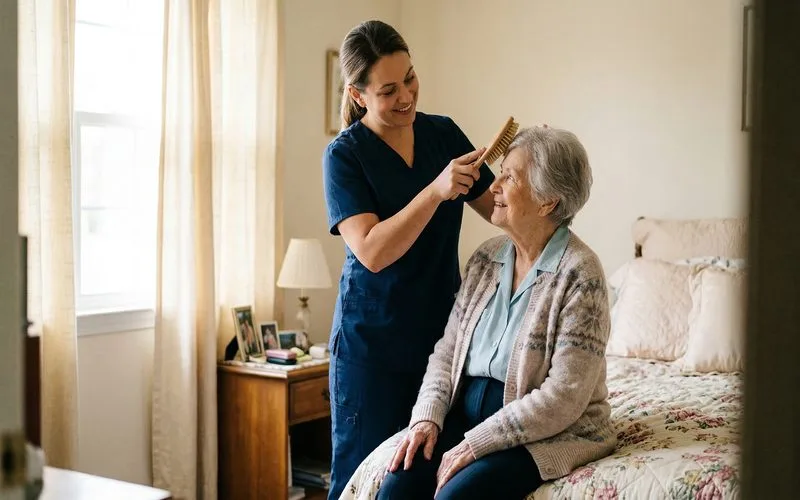
The services provided by home health aides focus on personal care and basic household support. Aides assist with bathing, including bed baths for patients with limited mobility, as well as showering with safety precautions. They help with grooming tasks such as hair care, shaving, nail care, and oral hygiene. Dressing assistance is provided for patients who have difficulty with buttons, zippers, or reaching due to surgical restrictions, arthritis, or neurological conditions. Toileting assistance, including help with bedpans, commodes, and transfers to the bathroom, is another core service.
Beyond personal care, HHAs provide light housekeeping directly related to the patient's care area, simple meal preparation following any dietary restrictions ordered by the physician, laundry of the patient's linens and clothing, medication reminders to help patients stay on schedule with their prescriptions, and ambulation assistance to help patients move safely around their home. These services are not custodial or convenience-based; they are ordered as part of a medical plan of care to support the patient's recovery.
Who Qualifies for Home Health Aide Services?
Medicare covers home health aide services only when the patient is simultaneously receiving at least one skilled service, such as skilled nursing, physical therapy, occupational therapy, or speech therapy. Home health aide services alone do not qualify for Medicare home health coverage. The patient must also be homebound and under a physician-ordered plan of care. The need for aide services must be documented in the care plan and directly related to the patient's medical condition.
Typical patients who receive HHA services include those recovering from surgery who cannot safely bathe or dress independently, stroke survivors who need assistance with personal hygiene while also receiving therapy, patients with advanced heart failure or COPD who lack the energy to perform basic self-care, and elderly patients with multiple chronic conditions whose functional abilities have declined to the point where personal care requires assistance.
What to Expect During Home Visits
Home health aide visits typically occur 2 to 3 times per week, with each visit lasting 1 to 2 hours. This schedule provides regular support while encouraging the patient and family to maintain as much independence as possible between visits. The aide follows a specific care plan developed by the supervising nurse or therapist, which outlines exactly which tasks should be performed during each visit.
A registered nurse must supervise the home health aide's work, conducting a supervisory visit at least every 14 days. If the aide is providing services under a therapy plan of care, the supervising therapist conducts the oversight visits. During these supervisory visits, the RN or therapist observes the aide's performance, updates the care plan as needed, and ensures the patient's needs are being met. The aide is also required to document the care provided at each visit, including any changes in the patient's condition that should be reported to the clinical team.
Medicare Coverage for Home Health Aide Services
Medicare Part A covers home health aide services at 100% with no copay, deductible, or coinsurance, but only as part of a broader home health episode that includes at least one skilled service. If the skilled service (such as nursing or therapy) is discontinued, the home health aide service must also end, even if the patient still needs personal care assistance. This is one of the most important distinctions patients and families need to understand about Medicare home health aide coverage. For patients who need ongoing personal care after skilled services end, options include private pay home care agencies, Medicaid waiver programs for eligible individuals, or veterans' benefits for qualifying veterans. Florida Medicare Advantage plans follow the same rules regarding aide services.
Home Health Aide Providers in Florida
Of 1,116 Medicare-certified home health agencies in Florida, 800 (71.7%) offer home health aide services. Use the filters below to find agencies in your city.
Frequently Asked Questions
What does a home health aide do?
A certified home health aide assists patients with personal care tasks including bathing, grooming, dressing, oral hygiene, toileting, and ambulation. They also help with light housekeeping, meal preparation, medication reminders, and laundry. HHAs do not perform medical procedures but provide essential support that helps patients remain safe and comfortable at home.
Does Medicare cover home health aide services?
Yes. Medicare covers home health aide services at 100% with no copay, but only when the patient is also receiving a skilled service such as nursing, physical therapy, occupational therapy, or speech therapy. Home health aide services alone do not qualify for Medicare coverage. The aide must be supervised by an RN or therapist.
How is a home health aide different from a private caregiver?
A Medicare-certified home health aide works under a physician-ordered plan of care and is supervised by a registered nurse or therapist. They must complete at least 75 hours of state-approved training and pass a competency exam. Private caregivers are hired independently or through non-medical agencies and are not covered by Medicare. HHAs follow a structured care plan with documented goals.
How many hours per week does a home health aide visit?
Under Medicare home health, aides typically visit 2 to 3 times per week for 1 to 2 hours per visit. This is not full-time or around-the-clock care. The visits are designed to supplement, not replace, family caregiving and are focused on specific personal care tasks identified in the plan of care.
Can a home health aide give medications?
Home health aides cannot administer medications. They can provide medication reminders, helping patients remember when to take their prescribed drugs, but the actual administration of medications must be performed by the patient, a family member, or a licensed nurse. This distinction is an important safety regulation in Florida home health.