What Is Home Health Care? A Guide for Florida Families
If a doctor, discharge planner, or family member has mentioned "home health care," you may be wondering what it actually involves. The term gets confused with non-medical home care, assisted living, and even hospice, but home health care is a specific type of skilled medical service delivered in a patient's home by licensed professionals. Florida has 1,116 Medicare-certified agencies that provide these services, and for most eligible patients, the cost is zero. This guide explains what home health care includes, who qualifies for it, and how to get started finding an agency in your area through our Florida Home Health Directory. If you are brand new to this process, our getting started with home health care guide walks you through every step from doctor's referral to first visit.
The Simple Definition of Home Health Care
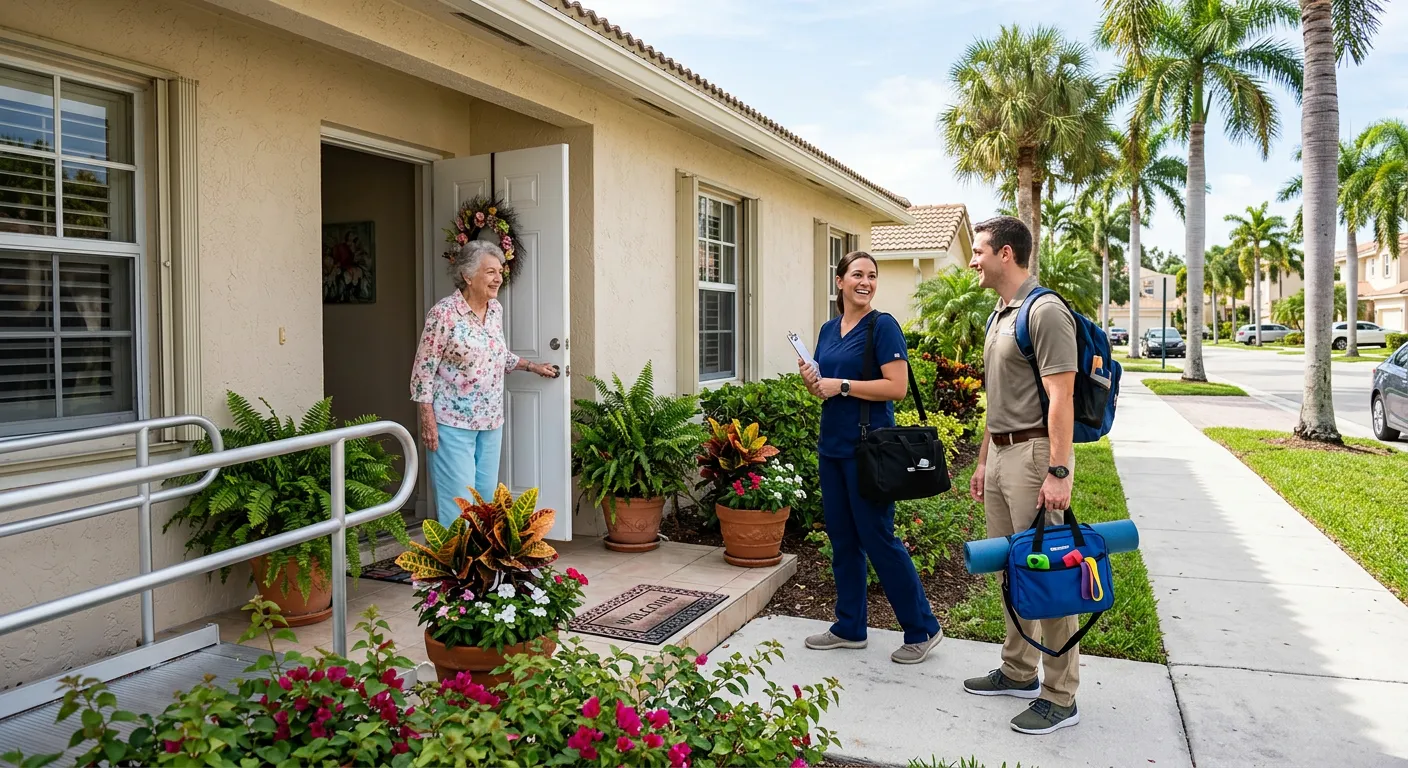
Home health care is skilled medical care delivered in a patient's home by licensed professionals, including registered nurses, physical therapists, occupational therapists, and speech-language pathologists. It is prescribed by a physician, carried out by a Medicare-certified agency, and designed to help patients recover from illness, injury, or surgery, or to manage ongoing chronic conditions.
The defining characteristics are: it is medical (not just companionship), it is ordered by a doctor, and it is delivered by trained clinical staff. This distinguishes it from every other type of in-home assistance.
Home Health Care vs. Home Care: The Key Difference
This is the most common source of confusion for Florida families. Here is the distinction in plain terms:
Home health care is skilled, medical, and prescribed. It includes nursing, therapy, and clinical monitoring. Medicare covers it at $0 for eligible patients. Services are delivered by licensed clinicians under a physician's plan of care.
Home care (also called non-medical home care or personal care) is non-clinical. It includes companionship, housekeeping, meal preparation, transportation, and help with activities of daily living. Medicare does not cover it. Families typically pay out of pocket, through long-term care insurance, or through Medicaid waiver programs.
Many families need both: home health for the medical piece and home care for the daily support piece. But they are separate services, often provided by different agencies. When you search our directory, every agency listed provides the medical, Medicare-certified version of home health care.
The 6 Types of Home Health Services in Florida
Medicare-certified home health agencies provide up to six categories of service. Not every patient needs all six, and the combination is determined by the physician's plan of care.
Skilled Nursing
Skilled nursing is the most common home health service. Registered nurses perform wound care, administer injections and IV medications, manage chronic disease (diabetes, heart failure, COPD), monitor vital signs, and educate patients and families about condition management. They also coordinate with the patient's physician to adjust the care plan as needed.
Physical Therapy
Physical therapy focuses on mobility, strength, balance, and fall prevention. Therapists work with patients recovering from surgery, stroke, fractures, or prolonged hospitalization. Because therapy happens in the patient's actual home, the exercises and techniques are tailored to the specific environment where the patient will be moving and living.
Occupational Therapy
Occupational therapy helps patients relearn the daily tasks that illness or injury has disrupted: dressing, bathing, cooking, managing medications, and navigating their home safely. Occupational therapists also recommend home modifications, such as grab bars, shower benches, and rearranged furniture, to reduce fall risk and increase independence.
Speech Therapy
Speech therapy addresses two categories of difficulty: communication problems (such as aphasia after a stroke or cognitive-linguistic challenges) and swallowing disorders (dysphagia). Speech-language pathologists work with patients to improve voice clarity, word-finding ability, and safe swallowing techniques.
Home Health Aide Services
Home health aides provide personal care assistance, including help with bathing, grooming, dressing, and light meal preparation, under the supervision of a nurse or therapist. Aide services are part of the skilled plan of care, which means they are covered by Medicare only when provided alongside a skilled service like nursing or therapy.
Medical Social Services
Medical social workers help patients and families navigate the non-clinical challenges that come with illness: connecting to community resources, counseling on emotional adjustments, assisting with insurance and financial questions, and coordinating transitions between care settings. This service is often underutilized but can be extremely valuable, especially for families managing a new diagnosis.
Who Typically Needs Home Health Care?
Home health care serves a wide range of patients. The most common situations include:
- After surgery or hospitalization: Patients recovering from joint replacements, cardiac procedures, or other surgeries often need skilled nursing and therapy at home.
- Chronic condition management: Patients with diabetes, heart failure, COPD, or other ongoing conditions benefit from regular nursing visits to monitor symptoms and prevent hospital readmissions.
- Stroke recovery: Stroke survivors typically need physical, occupational, and speech therapy. Our guide on home health after a stroke covers this in detail.
- Neurological conditions: Patients with dementia, Alzheimer's, or Parkinson's disease benefit from ongoing skilled care and caregiver training.
- Wound care: Patients with surgical wounds, pressure injuries, or diabetic ulcers need skilled nursing for wound management.
- Medication management: Patients on complex medication regimens, especially after discharge, benefit from nursing oversight to prevent errors and adverse interactions.
How Is Home Health Different From a Nursing Home?
Home health care keeps patients in their own home. Services are part-time and intermittent, meaning a nurse or therapist visits for a scheduled appointment (typically 45 to 90 minutes) and then leaves. The patient continues living in their home between visits.
A nursing home (skilled nursing facility) provides 24-hour residential care. Patients live at the facility and receive round-the-clock nursing supervision, meals, and assistance.
For most Florida families, home health is the preferred option when the patient's medical needs can be managed with periodic visits rather than constant supervision. It is also significantly less expensive: Medicare covers home health at $0, while nursing home costs in Florida average $8,000 to $10,000 per month for a semi-private room. Use our Home Health Cost Estimator to compare costs for your situation.
How Medicare Covers Home Health Care in Florida
Medicare Part A covers home health care at zero cost to the patient. There are no copays, no deductibles, and no coinsurance. To qualify, four conditions must be met:
- Homebound status: Leaving home requires considerable and taxing effort.
- Skilled care need: You need intermittent skilled nursing or therapy.
- Doctor's order: A physician must certify that home health is medically necessary.
- Medicare-certified agency: Care must come from a CMS-certified provider (every agency in our directory meets this requirement).
Coverage is provided in 60-day episodes that can be renewed as long as the patient continues to meet these criteria. For a complete breakdown, read our guides on Medicare home health coverage and how to qualify. You can also use our Medicare Eligibility Explainer for a quick check.
How to Get Started With Home Health Care in Florida
The process is straightforward once you know the steps:
- Talk to your doctor. If you or a loved one needs skilled care at home, bring it up at your next appointment. If you are in the hospital, speak with the discharge planner.
- Get a referral. The physician writes an order certifying the need for home health care. This is required for Medicare to cover the services.
- Search for agencies. Use our Florida Home Health Directory to find Medicare-certified agencies in your city. Browse providers in Miami, Tampa, Orlando, Jacksonville, or any of our 34 city pages.
- Compare your options. Use the Agency Comparison Builder to evaluate agencies side by side based on CMS star ratings and services offered.
- The agency contacts you. Once your doctor sends the referral, the agency typically reaches out within 48 to 72 hours to schedule an initial assessment visit.
For a complete walkthrough of every step, see our getting started with home health care guide. Once you have a shortlist, our best home health agencies in Florida guide can help you identify top-rated providers, and our agency comparison guide shows you exactly what metrics to evaluate.
Helpful Tools
Use our free tools to make informed decisions about home health care in Florida:
- Home Health Cost Estimator — Get Florida-specific pricing for home health services
- Agency Comparison Builder — Compare up to 3 agencies side by side
- Home Care Fit Quiz — Find out which type of care is right for your situation
- Medicare Eligibility Explainer — Check if you qualify for Medicare home health
- Discharge Readiness Checklist — Prepare for a safe transition home from the hospital
Frequently Asked Questions
What is the difference between home health care and home care?
Home health care is skilled medical care provided by licensed professionals (nurses, therapists) under a doctor's order. It is covered by Medicare at zero cost for eligible patients. Home care, sometimes called non-medical home care or personal care, provides companionship, housekeeping, meal preparation, and help with daily activities. Home care is not covered by Medicare and is typically paid out of pocket or through long-term care insurance. The key distinction is that home health care requires a physician's prescription and involves clinical services.
Does Medicare cover home health care in Florida?
Yes. Medicare covers home health care in Florida at zero cost to the patient, with no copays, deductibles, or coinsurance. To qualify, you must be homebound, need skilled care such as nursing or therapy, have a doctor's order, and use a Medicare-certified agency. Florida has 1,116 Medicare-certified home health agencies. Coverage is provided in 60-day episodes that can be renewed as long as the patient continues to meet the eligibility criteria.
How long does home health care last?
The duration of home health care depends on the patient's condition and progress. Medicare covers care in 60-day episodes that can be renewed as long as skilled care is medically necessary. Some patients need home health for a few weeks after surgery, while others with chronic conditions may receive services for several months or longer. The physician and home health team reassess the plan of care at the end of each 60-day episode to determine whether continued services are needed.
Can I choose my own home health agency?
Yes. You have the right to choose any Medicare-certified home health agency that serves your area. If you are being discharged from a hospital, the discharge planner may suggest an agency, but you are not required to accept that recommendation. You can research agencies on your own, compare CMS quality ratings, and select the provider that best fits your needs. Our directory lists all 1,116 Medicare-certified agencies in Florida to help you compare options.
What should I look for when comparing home health agencies?
Start with the agency's CMS star rating, which measures clinical quality on a 1 to 5 scale. Check whether the agency offers the specific services your loved one needs, such as physical therapy, skilled nursing, or speech therapy. Ask about staff qualifications, whether therapists are employed in-house or contracted, and how quickly services can begin. Also ask about communication practices and after-hours availability. Use our Agency Comparison Builder to evaluate multiple agencies side by side.