Home Health Care After a Stroke: Recovery Guide for Florida
After a stroke, the right home health agency can make a significant difference in a patient's recovery. Florida has over 1,100 Medicare-certified home health agencies, and many of them serve stroke survivors with specialized therapy teams. But not every agency has the same level of experience with neurological rehabilitation. This guide will help you understand what services to look for, how many visits to expect each week, what Medicare covers at zero cost, and how to compare agencies in your area using our Florida Home Health Directory.
What Home Health Services Do Stroke Survivors Typically Need?
Stroke affects each person differently, so the combination of services varies from patient to patient. However, most stroke survivors need several types of therapy working together. Here is what each discipline focuses on and why it matters when choosing an agency.
Physical Therapy
Physical therapy is one of the most common services for stroke survivors. Physical therapists help patients regain mobility, rebuild strength, and improve balance. Sessions typically focus on walking safely (with or without an assistive device), reducing fall risk, and restoring movement in affected limbs. When comparing agencies, ask whether their physical therapists have experience with neurological conditions specifically, not just general orthopedic rehab.
Occupational Therapy
Occupational therapy helps stroke survivors relearn everyday tasks such as dressing, bathing, eating, and managing household activities. Occupational therapists also assess the home environment and recommend modifications (like grab bars or rearranged furniture) to improve safety. This service is especially valuable because it focuses on practical independence in the patient's own living space.
Speech Therapy
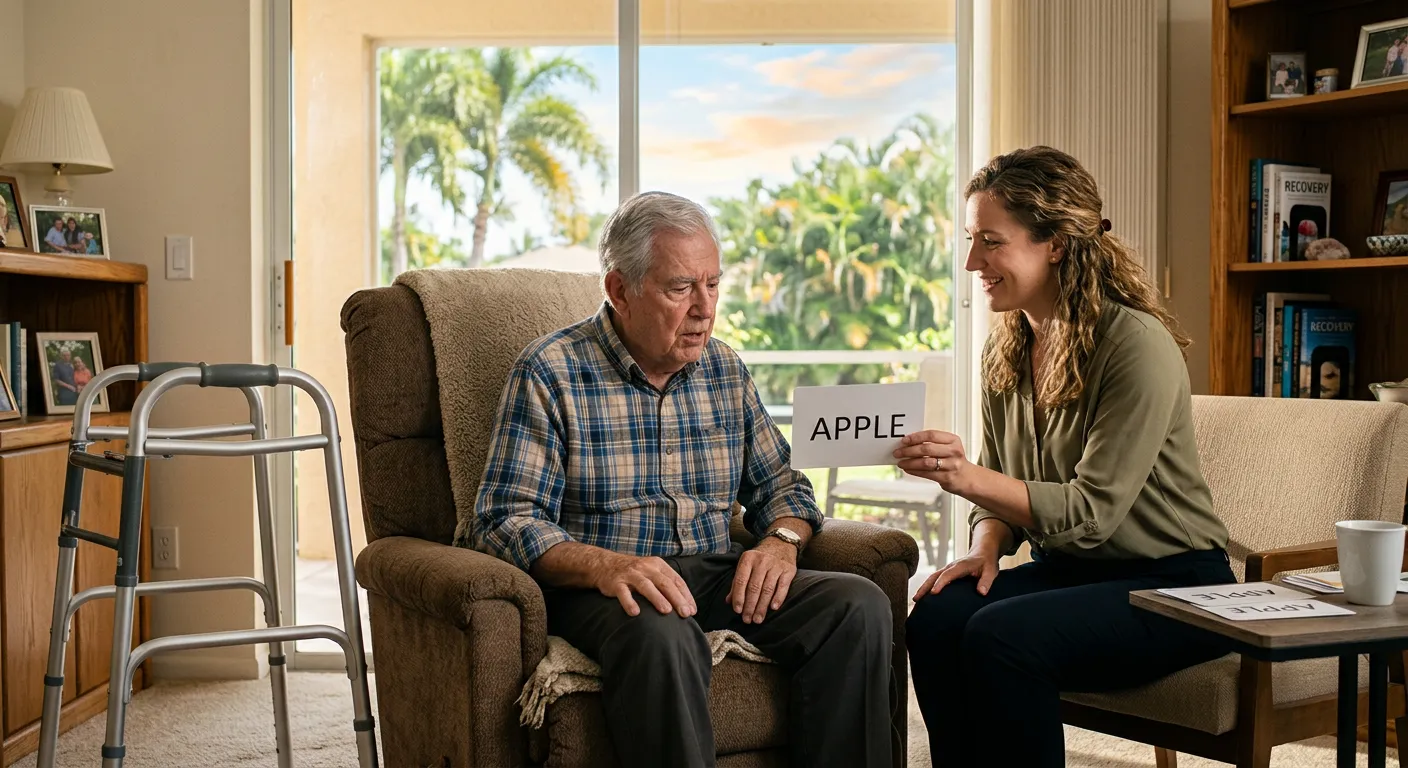
Speech therapy addresses two common challenges after stroke: communication difficulties (aphasia) and swallowing problems (dysphagia). Roughly one-third of stroke survivors experience some form of language impairment. When searching for an agency, confirm that they employ speech-language pathologists on staff rather than contracting them out, since consistent access to the same therapist helps build rapport and track progress.
Skilled Nursing and Home Health Aides
Skilled nursing visits cover medication management, blood pressure monitoring, and coordination with the patient's physician. Some stroke survivors also receive home health aide services for help with personal care tasks like bathing and grooming. The key point for families: a strong agency will coordinate all of these disciplines under one care plan rather than operating each service in isolation.
How Many Home Health Visits Per Week Should You Expect?
Visit frequency depends on the severity of the stroke and the patient's recovery stage. During the first month after hospital discharge, it is common to receive three to five therapy visits per week across all disciplines combined. For example, a stroke survivor might have physical therapy three times per week, occupational therapy twice, and speech therapy twice, totaling up to seven sessions.
As recovery progresses over the second and third months, visit frequency typically drops to two or three visits per week total. By months four through six, many patients transition to one or two visits per week before moving to outpatient therapy or a home exercise program.
When speaking with potential agencies, ask about their typical scheduling capacity. Some smaller agencies may struggle to provide the higher visit frequencies that stroke survivors need early in recovery. This is an important factor when comparing providers.
How Medicare Covers Post-Stroke Home Health at $0
One of the most important things for Florida families to know: Medicare covers home health care after a stroke at zero cost to the patient. There are no copays, no deductibles, and no coinsurance. According to CMS.gov, you must meet four conditions to qualify.
- Homebound status: Leaving home requires considerable effort due to mobility or cognitive limitations.
- Skilled care need: You require services like physical therapy, speech therapy, or skilled nursing.
- Doctor's order: A physician must certify that home health care is medically necessary.
- Medicare-certified agency: Services must come from an agency certified by CMS (every agency in our directory meets this requirement).
Most stroke survivors meet the homebound criteria during the first several months of recovery. Medicare provides coverage in 60-day episodes that can be renewed as long as skilled care is still needed. Use our Medicare Eligibility Explainer tool to check whether you or a family member qualifies.
How to Find Agencies With Neurological Rehab Experience in Florida
Not all home health agencies are equally prepared for stroke recovery. Some agencies primarily serve patients recovering from joint replacements or general medical conditions and may not have therapists trained in neurological rehabilitation techniques. Here is how to identify agencies with the right experience.
Step 1: Search your city in our directory. Start by browsing agencies in your area. We list all 1,116 Medicare-certified home health agencies in Florida with their CMS quality ratings, services offered, and contact information. Find providers in Miami, Tampa, Orlando, Jacksonville, or any of our 25 city pages.
Step 2: Call and ask the right questions. Once you have a short list of agencies, contact each one and ask the questions below. Their answers will quickly tell you whether they are a good fit for stroke recovery.
Questions to Ask Home Health Agencies About Stroke Care
Asking the right questions during your initial call can save time and prevent frustration later. Here are the most important ones for stroke recovery.
- Do your therapists have experience with neurological rehabilitation? Look for agencies whose therapists have worked specifically with stroke, brain injury, or other neuro patients.
- Can you provide PT, OT, and speech therapy through your own staff? Agencies that employ all three disciplines in-house can coordinate care more effectively than those that subcontract.
- What is your CMS star rating? Star ratings (1 to 5) are based on quality measures reported to Medicare. You can view these ratings for every agency in our directory.
- How quickly can you start services after a referral? Timing matters. The sooner therapy begins, the better. Most agencies can start within 48 to 72 hours of receiving a referral.
- Will the same therapists visit consistently? Continuity of care is important for stroke recovery. Rotating staff means the patient has to rebuild rapport repeatedly.
- How do you communicate progress to the family? Good agencies provide regular updates and include family members in goal-setting.
For a more detailed evaluation checklist, read our guide on how to choose a home health agency in Florida. If your loved one had a stroke during or after another procedure, our guide to post-surgical home health care covers the broader coordination process.
Compare Agencies Side by Side
Once you have spoken with two or three agencies, use our Agency Comparison Builder tool to compare them side by side. You can evaluate star ratings, services offered, and other quality indicators in one view. This makes it much easier to have an informed conversation with the patient's physician about which agency to choose.
You can also use our Home Health Cost Estimator to understand typical service costs in Florida, though keep in mind that Medicare covers the full cost for qualifying patients. If you are coordinating discharge from the hospital, our guide on home health care after hospital discharge explains how to set up services before you leave. Some stroke survivors also need help with joint replacement recovery at the same time — see our guides on hip replacement recovery and knee replacement recovery for those specific protocols.
Helpful Tools
Use our free tools to make informed decisions about home health care in Florida:
- Home Health Cost Estimator — Get Florida-specific pricing for home health services
- Agency Comparison Builder — Compare up to 3 agencies side by side
- Home Care Fit Quiz — Find out which type of care is right for your situation
- Medicare Eligibility Explainer — Check if you qualify for Medicare home health
- Discharge Readiness Checklist — Prepare for a safe transition home from the hospital
Frequently Asked Questions
How many home health visits per week do stroke survivors typically receive?
During the first month after discharge, stroke survivors commonly receive three to five therapy visits per week across all disciplines combined. For example, a patient might have physical therapy three times per week, occupational therapy twice per week, and speech therapy twice per week. As recovery progresses, visit frequency typically decreases to two or three visits per week total. Medicare covers home health in 60-day episodes, and the exact schedule is set by the physician and care team based on the patient's needs and progress.
Does Medicare cover home health care after a stroke at no cost?
Yes. Medicare covers home health care after a stroke with zero out-of-pocket cost to the patient, meaning no copays, no deductibles, and no coinsurance. To qualify, you must be homebound, need skilled care such as physical therapy or speech therapy, have a doctor's order, and use a Medicare-certified agency. Most stroke survivors meet these criteria during the first several months of recovery. Coverage is provided in 60-day episodes that can be renewed as long as skilled care remains medically necessary.
How do I find a home health agency with neurological rehab experience in Florida?
Start by searching our Florida Home Health Directory for agencies in your city. When contacting agencies, ask whether their therapists have training or certification in neurological rehabilitation techniques. Ask how many stroke patients they currently serve and whether they can provide all three therapy types (physical, occupational, and speech) through their own staff. You can also ask for references from families of stroke survivors. Agencies with experience in neuro rehab will be familiar with these questions and ready to answer them.
What types of home health services do stroke survivors need?
Stroke survivors typically need a combination of physical therapy for mobility and balance, occupational therapy for relearning daily activities like dressing and eating, and speech therapy for communication or swallowing difficulties. Skilled nursing is also common for medication management and monitoring. Some patients also benefit from home health aide services for personal care assistance. The exact combination depends on which abilities were affected by the stroke, and a home health agency will conduct an initial assessment to build a personalized care plan.
What questions should I ask a home health agency before choosing one for stroke recovery?
Ask these key questions: Do your therapists have experience with neurological rehabilitation? Can you provide physical therapy, occupational therapy, and speech therapy through your own staff? What is your CMS star rating? How quickly can you start services after a referral? Will the same therapists visit each time, or will staff rotate? How do you communicate progress updates to the family and physician? What happens if my loved one needs more visits than originally planned? Comparing answers from multiple agencies will help you make a confident decision.