
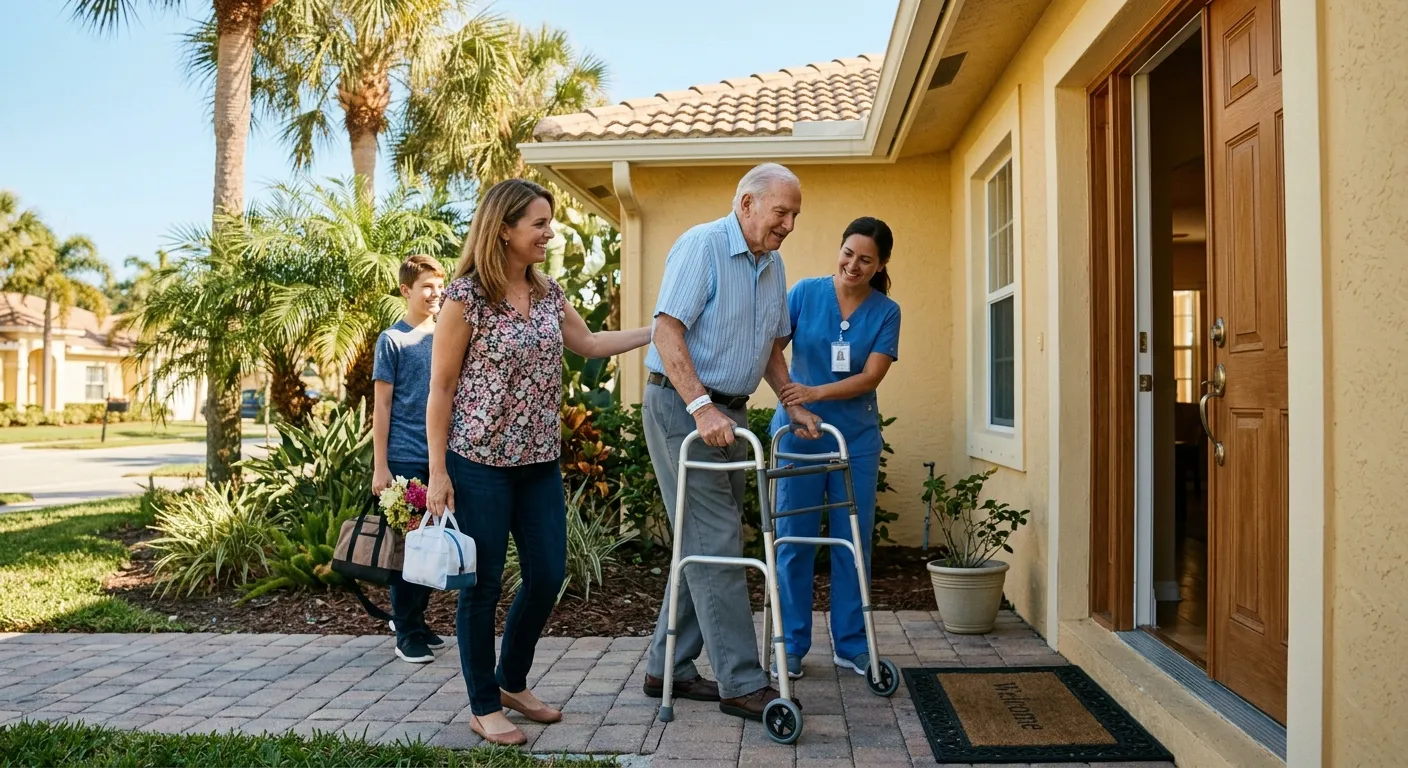
Home Health Care After Hospital Discharge: Your Florida Guide
The first days after hospital discharge are among the most dangerous in a patient's recovery. According to CMS data, roughly 15% of Medicare patients are readmitted to the hospital within 30 days of discharge nationally, and many of those readmissions are preventable. In Florida, where a large population of older adults manages chronic conditions alongside surgical recoveries, the transition from hospital to home is a critical gap that home health care is designed to fill.
Home health care after hospital discharge places a team of licensed professionals in your home during the window when complications are most likely to arise. Whether you are recovering from heart surgery in Jacksonville, managing a new diabetes diagnosis in Miami, or healing from a fall-related injury anywhere in the state, understanding how the discharge-to-home-health process works can make the difference between a smooth recovery and a return trip to the emergency room. For a broader look at post-surgical services, see our guide to home health care after surgery.
Why Home Health Care Matters After Hospital Discharge
Hospital readmissions are costly, disruptive, and often avoidable. The most common reasons patients end up back in the hospital within 30 days include medication errors, surgical wound complications, falls at home, and failure to recognize warning signs of deterioration. Each of these risks is directly addressed by home health services.
A skilled nurse visiting your home can catch a wound infection before it becomes sepsis. A physical therapist can identify fall hazards and strengthen your balance before a fall sends you back to the ER. Research consistently shows that patients who receive home health care after discharge have lower readmission rates than those who try to manage recovery entirely on their own.
For Florida's large Medicare population, home health care also offers a significant financial advantage. Medicare covers home health services at zero cost to the patient when eligibility requirements are met, making it one of the most valuable and underutilized benefits available after a hospital stay.
How Hospital Discharge Planning Works in Florida
Discharge planning begins well before you leave the hospital. Every Florida hospital is required to have a discharge planning process, and most assign a discharge planner or case manager to patients who will need post-hospital services. This person coordinates your transition from inpatient care to the next phase of your recovery.
The discharge planner will assess your home situation, determine what level of care you need, and help arrange home health services. They will typically provide you with a list of Medicare-certified home health agencies that serve your area. Here is something many patients do not realize: you have the right to choose your own home health agency. The hospital may recommend a preferred provider, but federal law prohibits them from requiring you to use any specific agency.
Before you leave the hospital, make sure you ask your discharge planner these questions:
- What specific home health services have been ordered for me?
- When should I expect the first home health visit?
- What are the warning signs that should prompt me to call the agency or go to the ER?
- Has the home health referral already been submitted, and which agency is it going to?
- What medications have changed during my hospital stay, and do I have prescriptions for all of them?
Taking an active role in your discharge plan reduces confusion and helps ensure nothing falls through the cracks during the transition home. Our Discharge Readiness Checklist can help you organize everything you need before leaving the hospital.
What Home Health Services Start After Discharge
Home health care after hospital discharge typically begins with an initial assessment visit within 24 to 48 hours of arriving home. A registered nurse conducts a comprehensive evaluation that covers your medical history, current medications, vital signs, functional abilities, pain levels, and home environment. This assessment forms the foundation of your individualized plan of care.
Depending on your condition and your physician's orders, your home health team may include several disciplines:
- Skilled nursing: Medication reconciliation is one of the most critical tasks. Your nurse will compare the medications you were taking before hospitalization with what was prescribed at discharge, identify any conflicts or duplications, and make sure you understand each medication's purpose, dosage, and timing. Nurses also monitor surgical wounds, manage IV medications if needed, check vital signs, and educate you on recognizing symptoms that require medical attention.
- Physical therapy: A physical therapist evaluates your mobility, strength, and balance, then develops a treatment plan to restore your functional abilities. After surgery or a prolonged hospital stay, even basic movements like getting out of bed, walking to the bathroom, and climbing stairs can be challenging and risky without professional guidance.
- Occupational therapy: An occupational therapist focuses on helping you safely perform daily activities such as bathing, dressing, and preparing meals. They also conduct a thorough home safety assessment, identifying hazards like loose rugs, poor lighting, and missing grab bars that could lead to falls.
- Home health aide: If ordered by your physician, a home health aide can assist with personal care tasks like bathing and grooming under the supervision of a nurse or therapist.
Does Medicare Cover Home Health After Hospital Discharge?
Yes. Medicare covers home health care after hospital discharge, and in most cases, you pay nothing out of pocket. There is no copay, no deductible, and no coinsurance for Medicare-covered home health services. This applies to both Medicare Part A and Part B.
A common misconception is that you must have a qualifying three-day inpatient hospital stay to receive home health care. While a three-day stay does qualify you for home health under Medicare Part A, it is not the only path. Medicare Part B also covers home health care without any prior hospitalization requirement, as long as you meet these conditions:
- You are homebound, meaning leaving home requires considerable and taxing effort.
- You need intermittent skilled care, such as skilled nursing, physical therapy, or speech therapy.
- A physician has ordered home health services and established a plan of care.
- The home health agency providing your care is Medicare-certified.
After a hospital discharge, most patients clearly meet the homebound requirement for at least the first several weeks. Medicare provides home health in 60-day episodes, and your physician can recertify for additional episodes if skilled care remains medically necessary. For a detailed breakdown of eligibility rules, read our guide on Medicare home health coverage.
Your Hospital Discharge Checklist
A structured checklist can prevent the most common post-discharge problems. Before you leave the hospital, make sure each of these items is addressed:
- Medications: Get a complete, written list of every medication you should be taking at home, including new prescriptions, changed dosages, and any medications that have been discontinued. Have prescriptions filled the same day you are discharged, or arrange for a family member to pick them up.
- Follow-up appointments: Schedule all follow-up visits with your surgeon, primary care physician, or specialists before you leave the hospital. Write down the dates, times, and locations.
- Home health agency: Confirm which agency will be providing your care, when the first visit is scheduled, and have the agency's phone number saved in your phone.
- Durable medical equipment: If you need a hospital bed, walker, wheelchair, oxygen, or other equipment at home, confirm that delivery has been arranged and that the equipment will be in place before you arrive.
- Emergency plan: Know when to call your home health agency, when to call your doctor, and when to call 911. Keep these numbers posted where you and your caregiver can see them.
- Caregiver plan: Identify who will be with you for the first 48 hours at home. Even with home health visits, you need someone available between visits during the initial transition period.
Use our interactive Discharge Readiness Checklist tool to walk through each of these items step by step and generate a personalized checklist you can print or save to your phone. If you or your family member is being discharged after a specific procedure, our dedicated guides cover the recovery details: hip replacement, knee replacement, open heart surgery, stroke, and chemotherapy.
Common Discharge Mistakes to Avoid
Even with good planning, certain mistakes trip up patients and families during the post-discharge period. Here are the most common ones and how to prevent them:
- Not filling prescriptions the same day. Medication gaps are one of the leading causes of readmission. If you cannot get to the pharmacy yourself, arrange for a family member or use a pharmacy delivery service. Many Florida pharmacies, including major chains in Miami, Tampa, and Orlando, offer same-day delivery.
- Skipping or delaying the first home health visit. The initial assessment visit is the most important one. It establishes your baseline, catches medication errors, and identifies immediate safety risks. If the agency has not contacted you within 24 hours of discharge, call them directly.
- Not having a caregiver present for the first 48 hours. Home health nurses and therapists visit for limited periods. Between visits, you need someone who can help with meals, medication reminders, and getting to the bathroom safely. Florida's Area Agencies on Aging can help connect you with caregiver support resources if you live alone.
- Ignoring warning signs. Fever, increased pain, redness or drainage at a surgical site, sudden shortness of breath, chest pain, or confusion are all signs that something may be wrong. Do not wait for your next home health visit to report these symptoms. Call the agency's 24-hour line or seek emergency care immediately.
- Trying to do too much too soon. The urge to return to normal activity is strong, but pushing beyond what your care team has recommended can lead to falls, wound complications, or setbacks that extend your recovery significantly.
Finding the Right Home Health Agency in Florida
Florida has over 1,100 Medicare-certified home health agencies, which means you have options. When choosing an agency after hospital discharge, look for providers with high quality ratings, low rehospitalization rates, and staff experienced with your specific condition. Our guide on how to choose a home health agency in Florida walks you through the seven most important questions to ask.
You can also search our directory by city to find agencies near you:
- Home health agencies in Miami
- Home health agencies in Jacksonville
- Home health agencies in Tampa
- Home health agencies in Orlando
- Home health agencies in Fort Lauderdale
The transition from hospital to home does not have to be overwhelming. With the right home health team in place, a clear discharge plan, and the knowledge to avoid common pitfalls, you can recover safely in the comfort of your own home. Start by completing our Discharge Readiness Checklist, and take the first step toward a smooth recovery.
Helpful Tools
Use our free tools to make informed decisions about home health care in Florida:
- Home Health Cost Estimator — Get Florida-specific pricing for home health services
- Agency Comparison Builder — Compare up to 3 agencies side by side
- Home Care Fit Quiz — Find out which type of care is right for your situation
- Medicare Eligibility Explainer — Check if you qualify for Medicare home health
- Discharge Readiness Checklist — Prepare for a safe transition home from the hospital
Frequently Asked Questions
How soon after hospital discharge does home health start?
Home health care typically begins within 24 to 48 hours after hospital discharge. Your discharge planner coordinates the referral before you leave the hospital, and the home health agency contacts you to schedule the first visit. The initial assessment visit usually includes a comprehensive evaluation by a registered nurse who reviews your medications, checks your vital signs, assesses your home environment, and establishes a plan of care with your physician.
Can the hospital force me to use a specific home health agency?
No. Under federal law, you have the right to choose any Medicare-certified home health agency in your area. The hospital discharge planner may recommend specific agencies, but they cannot require you to use a particular provider. Florida has over 1,100 Medicare-certified home health agencies, so you have many options. Ask the discharge planner for a list of agencies that serve your area, and compare their quality ratings before making a decision.
What if I need home health but wasn't admitted to the hospital?
You can still qualify for Medicare home health care without a prior hospital stay. Medicare Part B covers home health services as long as you are homebound, need skilled care such as nursing or therapy, and have a physician's order for home health services. Many patients receive home health after an emergency room visit, an outpatient procedure, or simply because their condition has changed and they need skilled care at home.
How long does home health care last after discharge?
Home health care after hospital discharge typically lasts between two and eight weeks, depending on your condition and recovery progress. Medicare provides home health in 60-day episodes, and your physician can recertify for additional episodes if you still need skilled care. The frequency of visits decreases as you improve. Most patients start with several visits per week and gradually taper down as they regain independence.
What should I do if home health care has not started within 48 hours of discharge?
If a home health agency has not contacted you within 48 hours of your hospital discharge, call the agency directly using the phone number provided by your discharge planner. If you do not have the agency's contact information, call the hospital's discharge planning department and ask them to follow up on the referral. Delays can happen due to incomplete paperwork, insurance verification, or scheduling backlogs, but the initial assessment visit should not be delayed more than 48 hours. If the agency cannot accommodate a timely visit, you have the right to request a referral to a different Medicare-certified agency in your area.